Where to Stay in Tokyo
Six areas, 15 hotels checked against their own websites, the airport links that serve each, and the accommodation tax that switches to 3% of the room charge on 1 April 2027.
For most first-time visitors, the best place to stay in Tokyo is Marunouchi and Otemachi, the business district between Tokyo Station and the Imperial Palace. It puts the shinkansen, the Narita Express and the palace gardens at the door, and Ginza is a short walk south. Choose Ginza and Nihonbashi for shopping and dining, Toranomon and Roppongi for newer towers and art museums, Shinjuku for west-side energy and airport buses to the door, Shibuya and Omotesando for fashion and a younger feel, and Asakusa and Ueno for temples, museums and old-Tokyo streets.
Tokyo is large, but its rail network is dense. The right area depends less on distance than on which lines a client will use most, and how they arrive from Narita or Haneda. Each area below notes who it suits and the fastest airport link.
One change matters for every quote that runs past 31 March 2027. Tokyo’s accommodation tax moves from a flat ¥100 or ¥200 per person per night to 3% of the room charge on 1 April 2027. For a luxury room that is a large jump, and it applies to spring 2027 stays already on the books. It is covered in detail below.
For the wider country picture, start with our Japan destination hub, and for Kyoto, see Where to Stay in Kyoto.
Read next · GuideWellington Is Not a Ferry Terminal11 min →The areas at a glance
| Area | Best for | Fastest airport link | Trade-offs |
|---|---|---|---|
| Marunouchi and Otemachi | First-timers, rail-heavy itineraries | Narita Express to Tokyo Station | Quiet at weekends; business-district feel |
| Ginza, Hibiya and Nihonbashi | Shopping, dining, theatre | Keikyu from Haneda to Higashi-ginza | Busy; fewer green spaces |
| Toranomon, Roppongi and Akasaka | New luxury towers, art museums, nightlife | Tokyo Monorail from Haneda to Hamamatsucho, then a short taxi | Spread out; hilly in parts |
| Shinjuku | Views, nightlife, day trips west | Airport Limousine Bus to the hotel door | Large, busy stations |
| Shibuya, Omotesando and Aoyama | Fashion, design, younger travellers | Taxi, or Keikyu from Haneda to Shinagawa and change | Crowded around Shibuya Station |
| Asakusa and Ueno | Temples, museums, repeat visitors | Keikyu from Haneda, through to Asakusa | Further from the west-side districts |
Hotel comparison
Room counts and details below come from each hotel’s own website, its parent brand’s site or its press materials, as of October 2026. Rates change daily by season, so we have not published a “from” price; check live rates before quoting, and remember the accommodation tax is added on top.
| Hotel | Area | Rooms (per hotel) | What stands out | Best for |
|---|---|---|---|---|
| Aman Tokyo | Otemachi | 84 suites | 30-metre heated indoor pool; 2,500 sq m spa | Space, wellness |
| Four Seasons Hotel Tokyo at Otemachi | Otemachi | 190 (170 rooms, 20 suites) | Imperial Palace and Mount Fuji views; direct access to Otemachi Station | First-timers, rail-heavy trips |
| Hoshinoya Tokyo | Otemachi | 84 rooms | Ryokan in a tower; guest-only hot spring | A ryokan night in the city |
| The Peninsula Tokyo | Hibiya | Not stated on the pages checked | Rooms from 54 sq m; Hibiya Park and Imperial Palace Gardens views | Classic luxury, brand loyalists |
| Bvlgari Hotel Tokyo | Yaesu | 98 rooms and suites | Floors 40 to 45; 25-metre indoor pool | Design lovers, couples |
| Mandarin Oriental, Tokyo | Nihonbashi | 179 (157 rooms, 22 suites) | Skyline and Mount Fuji views; connecting rooms on request | Food-focused stays, families |
| The Okura Tokyo | Toranomon | 508 rooms in two buildings | Lobby details carried over from the original hotel | Groups, Japanese heritage design |
| Andaz Tokyo Toranomon Hills | Toranomon | Not stated | 52nd-floor rooftop bar; AO Spa & Club with pool | Couples, views |
| Janu Tokyo | Azabudai Hills | Not stated consistently (see note) | Rooms from 55 sq m; 25-metre lap pool in a 4,000 sq m wellness centre | Wellness-focused guests |
| Park Hyatt Tokyo | West Shinjuku | 171 rooms | Reopened after a 19-month restoration; Airport Limousine Bus to the door | Repeat visitors, design lovers |
| Kimpton Shinjuku Tokyo | West Shinjuku | 142 rooms | Pet-friendly; rooftop bar | Younger travellers, pet owners |
| Trunk(Hotel) Cat Street | Jingumae, Shibuya | Not stated | Suites with kitchens and terraces; balcony junior suite for four | Design lovers, small families |
| Hotel Indigo Tokyo Shibuya | Dogenzaka, Shibuya | Not stated | Five minutes from Shibuya Station; terrace beer garden | Nightlife, shorter stays |
| The Gate Hotel Kaminarimon by Hulic | Asakusa | 134 rooms | One-minute walk to Kaminarimon; rooftop terrace with Skytree views | Temple-focused stays |
| OMO3 Asakusa by Hoshino Resorts | Asakusa | 98 rooms | Rooms for four; top-floor lounge over Senso-ji | Families, value |
Janu Tokyo’s own pages give two different room counts (122 rooms and suites, and 80 bedrooms), so we have not published one.
Marunouchi and Otemachi: next to Tokyo Station
Marunouchi and Otemachi wrap around the west side of Tokyo Station, between the station and the Imperial Palace. It is the most practical base for clients doing day trips by shinkansen, or arriving from Narita: the fastest Narita Express reaches Tokyo Station in 53 minutes, according to JR East. The palace East Gardens and the moat path give clients somewhere to walk or run in the morning.
The district is quiet at weekends and after office hours, which suits some clients and not others. Restaurants are concentrated in the station and the office towers rather than on the street.

Aman Tokyo. Aman occupies the top six floors of The Otemachi Tower, within walking distance of Tokyo Station. All 84 keys are suites, on levels 35 to 38, starting at 71 square metres. The 2,500-square-metre spa has eight treatment rooms and a 30-metre heated indoor pool. Dining includes Arva, an Italian restaurant, and Musashi by Aman for Edomae sushi. Aman puts Haneda about 40 minutes and Narita about 60 minutes away by car.
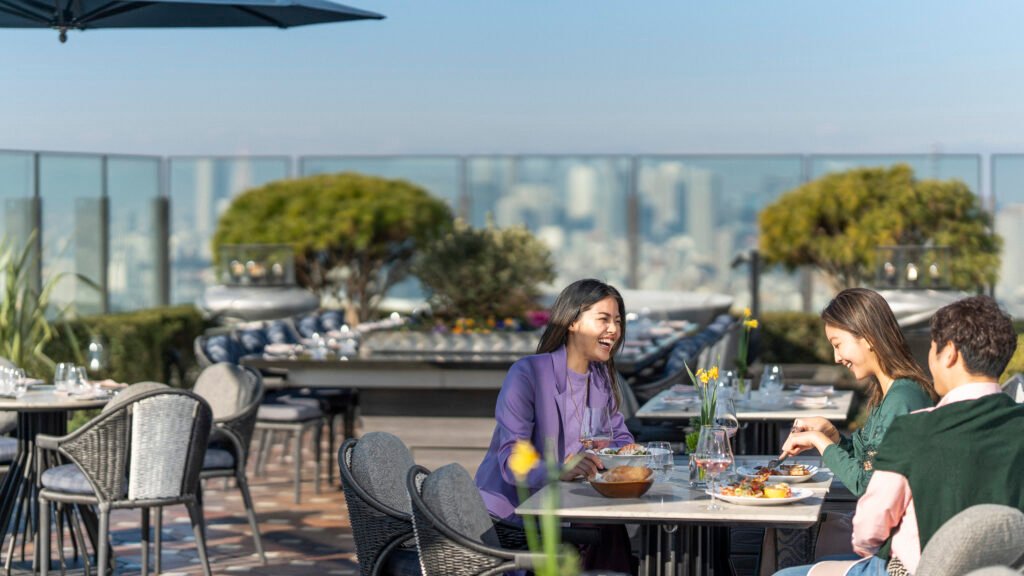
Four Seasons Hotel Tokyo at Otemachi. Opened in September 2020 on the top six floors of the 39-storey Otemachi One Tower, it has 190 rooms: 170 guest rooms and 20 suites. Four Seasons highlights views over the Imperial Palace and its gardens, with Mount Fuji in the distance. There is a 20-metre heated indoor pool, the five-room Infuse Spa and est, a French restaurant that uses Japanese techniques. The hotel has direct access to Otemachi Station and is within walking distance of Tokyo Station; Four Seasons quotes about 25 minutes to Haneda and 55 minutes to Narita.

Hoshinoya Tokyo. A ryokan in a tower, opened on 20 July 2016, with 84 rooms on 14 guest-room floors of six rooms each. Guests take off their shoes at the entrance and walk on tatami throughout. The guest-only Otemachi Onsen draws hot-spring water from 1,500 metres underground. Hoshino Resorts puts it a 10-minute walk from the Marunouchi North Exit of Tokyo Station. Children under 12 can share a bed, within each room’s maximum of three guests.
Ginza, Hibiya and Nihonbashi: shopping, dining and theatre
Ginza is Tokyo’s classic shopping district, with department stores, flagship boutiques and a high density of top restaurants. Hibiya, on its western edge, borders Hibiya Park and the theatre district. Nihonbashi, to the north-east, is the old merchant quarter, home to long-established department stores and food shops.
The area is well placed for Haneda arrivals: Keikyu trains from Haneda Airport Terminal 3 reach Higashi-ginza in about 23 minutes, according to Keikyu, running through onto the Toei Asakusa line. Waldorf Astoria Tokyo Nihonbashi is due in 2027; see our Hotel Watch entry for the latest.

The Peninsula Tokyo. In Hibiya, its rooms start at 54 square metres. The Grand Premier Park Rooms (63 square metres, on floors 9 to 21) look over Hibiya Park or the Imperial Palace Gardens. Ginza’s main shopping streets are on the doorstep.

Bvlgari Hotel Tokyo. On floors 40 to 45 of the Tokyo Midtown Yaesu skyscraper, in the Yaesu district on the east side of Tokyo Station, it has 98 rooms and suites. The 1,800-square-metre spa on the 40th floor has nine treatment rooms and a 25-metre indoor pool. Dining includes Il Ristorante – Niko Romito, Sushi Hōseki and The Bvlgari Bar.

Mandarin Oriental, Tokyo. On the upper floors of the Nihonbashi Mitsui Tower, it has 157 rooms and 22 suites, with views across the skyline and, on clear days, to Mount Fuji. Connecting rooms are available on request, which helps families. The hotel lists a spa and its restaurants include Sense, for Cantonese food, and Sushi Shin by Miyakawa.
Toranomon, Roppongi and Akasaka: the new towers
The hills south-west of the palace hold much of Tokyo’s recent luxury hotel building, in mixed-use towers around Toranomon and Azabudai, alongside the art museums and nightlife of Roppongi and the hotels and embassies of Akasaka. It suits clients who want new rooms with skyline views and are comfortable using taxis between districts.
From Haneda, the Tokyo Monorail runs from Terminal 3 to Hamamatsucho in 13 minutes, with trains on average every five minutes, according to the operator; from there the towers are a short taxi ride.
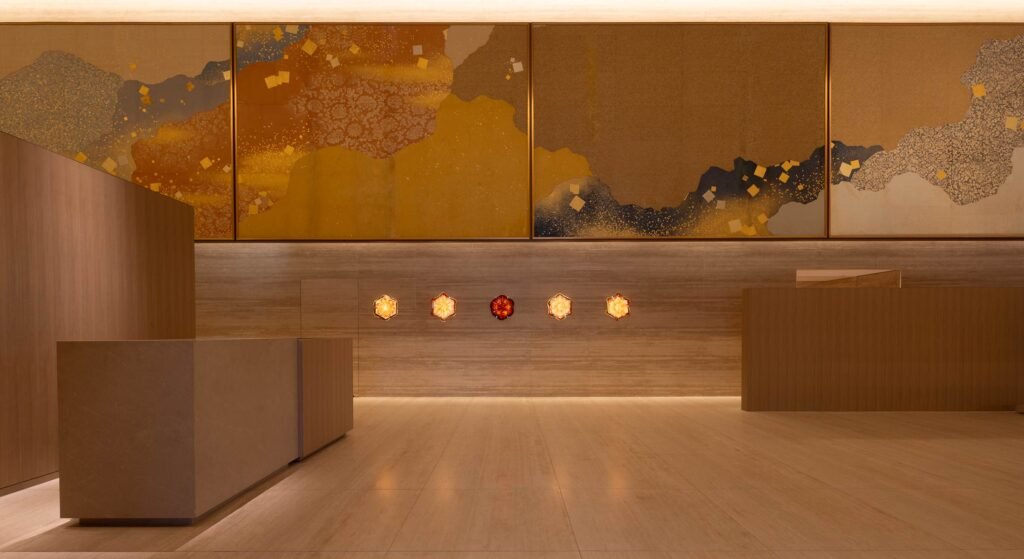
The Okura Tokyo. In Toranomon, The Okura Tokyo has 508 rooms in two buildings: 140 in the Heritage Wing and 368 in the 41-storey Prestige Tower. The new lobby carries over details from the original hotel, including its Okura lantern ceiling lights and world clock. Okura Fitness & Spa is in the Prestige Tower. Toranomon Hills Station on the Hibiya line is about a five-minute walk away, and Roppongi-itchome about seven.

Andaz Tokyo Toranomon Hills. On the upper floors of Toranomon Hills Mori Tower, its semi-open-air Rooftop Bar on the 52nd floor sits about 250 metres above ground, with views to Tokyo Bay; guests must be 20 or older. AO Spa & Club has a pool, gym and spa. Toranomon Hills (Hibiya line) and Toranomon (Ginza line) stations serve the tower.

Janu Tokyo. Set on the first 13 floors of Residence A Tower at Azabudai Hills, Janu’s rooms start at 55 square metres, and several signature suites face Tokyo Tower. Its fact sheet lists a 4,000-square-metre wellness centre with a 25-metre heated lap pool, and eight places to eat and drink. Kamiyacho (Hibiya line) and Roppongi-itchome (Namboku line) stations are a short walk away.
Shinjuku: west-side energy and buses to the door
Shinjuku has two faces. West Shinjuku is a district of office and hotel towers with long views to the west; east Shinjuku is shopping, restaurants and nightlife. It is a convenient base for day trips west of the city.
Its practical advantage is the Airport Limousine Bus, which stops at the entrances of several Shinjuku hotels, so clients can ride from either airport to the door without changing trains. Hotels on the Narita and Haneda routes include Park Hyatt Tokyo, Keio Plaza Hotel, Hilton Tokyo, Hyatt Regency Tokyo, Hotel Century Southern Tower, Hotel Sunroute Plaza Shinjuku and Shinjuku Washington Hotel, according to the bus operator. The adult fare is ¥3,600 from Narita and ¥1,400 from Haneda. At Park Hyatt Tokyo, at 3-7-1-2 Nishi-Shinjuku, the bus boards and drops at the hotel’s main entrance.

Park Hyatt Tokyo. Hyatt announced the hotel’s reopening on 9 December 2025, after a 19-month restoration led by Studio Jouin Manku. It occupies floors 39 to 52 of Kenzo Tange’s Shinjuku Park Tower and has 171 rooms; Deluxe Rooms are 55 square metres. The New York Grill & Bar is back on the 52nd floor, and the pool sits under a glass atrium in Club On The Park, alongside a spa with seven treatment rooms.

Kimpton Shinjuku Tokyo. In Nishi-Shinjuku, IHG’s Kimpton has 142 rooms, three restaurants and bars, including the rooftop bar 86, and a daily social hour with complimentary drinks. It welcomes pets, worth knowing for long-stay clients.
Shibuya, Omotesando and Aoyama: fashion and design
Shibuya is the city’s youth and entertainment hub, built around its famous scramble crossing. Omotesando, a broad tree-lined avenue to the north, and the quieter streets of Aoyama hold flagship fashion stores, architecture and cafés, and Meiji Jingu’s forest is next door. It suits clients who care about design and shopping, and younger travellers.

Trunk(Hotel) Cat Street. In Jingumae, Trunk’s room types range from 20-square-metre standard rooms to a 140-square-metre Terrace Suite with a 70-square-metre terrace. The Balcony Junior Suite sleeps up to four, with a bunk bed, and some suites have full kitchens. There is an all-day restaurant, a yakitori counter and a lounge open to the neighbourhood.

Hotel Indigo Tokyo Shibuya. On Dogenzaka, about five minutes from Shibuya Station, it has two restaurants, including Gallery 11, a terrace beer garden and a 24-hour gym. There is no pool. It suits clients who want Shibuya’s nightlife on the doorstep.
Asakusa and Ueno: temples, museums and old Tokyo
Asakusa, on the Sumida River in the north-east, grew up around Senso-ji temple and keeps a low-rise, old-Tokyo character. Ueno, to the west, is built around Ueno Park and its museums. The area suits repeat visitors and clients who want a more traditional feel.
Keikyu trains run through from Haneda to Asakusa: about 34 minutes from Terminal 3 and 37 minutes from Terminals 1 and 2, according to Keikyu.

The Gate Hotel Kaminarimon by Hulic. Opened on 10 August 2012, a one-minute walk from the Kaminarimon gate, it has 134 rooms on floors 3 to 14. The 14th-floor rooftop terrace looks across Asakusa to Tokyo Skytree.
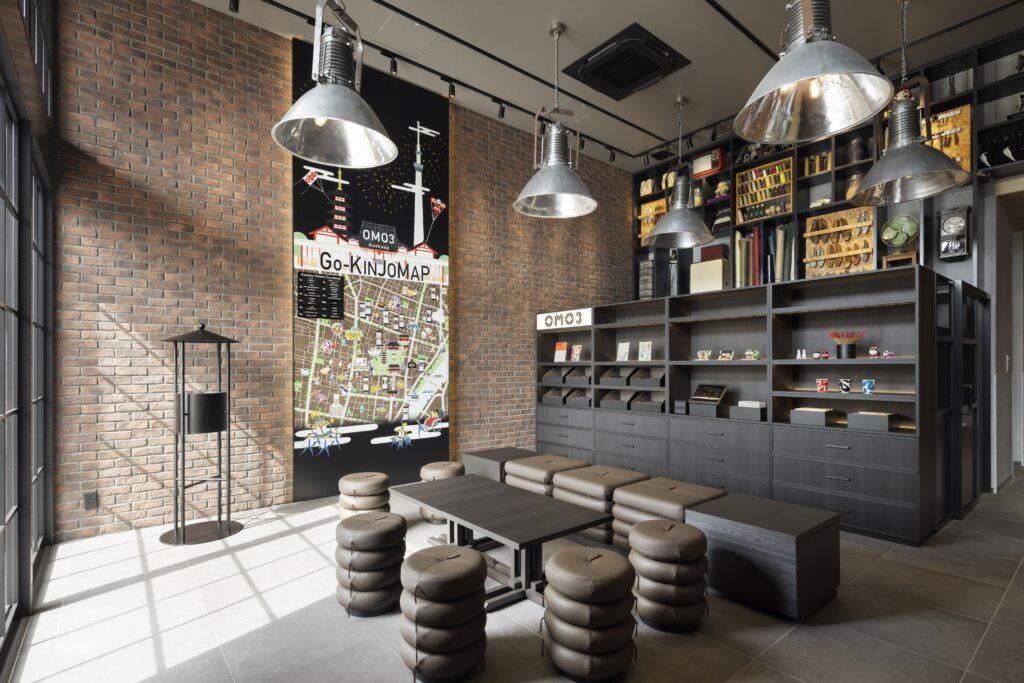
OMO3 Asakusa by Hoshino Resorts. Opened on 31 July 2023, a four-minute walk from Exit 7 of Asakusa Station on the Ginza line, it has 98 rooms in eight types. The Deluxe Quad Room sleeps four. The top-floor lounge looks west over the grounds of Senso-ji and east to Tokyo Skytree. It is a practical choice for families.
For hotels opening in Japan over the next year, see our new hotels opening tracker.
Best for
- First-time visitors: Four Seasons Hotel Tokyo at Otemachi or The Peninsula Tokyo, for central, walkable access and easy airport links.
- Rail-heavy itineraries: Marunouchi and Otemachi, next to Tokyo Station.
- Door-to-door airport transfers without a private car: Shinjuku hotels on the Airport Limousine Bus routes, such as Park Hyatt Tokyo.
- A ryokan night in the city: Hoshinoya Tokyo.
- Pools and spas: Aman Tokyo, Bvlgari Hotel Tokyo or Janu Tokyo.
- Families: Mandarin Oriental, Tokyo, for connecting rooms, or OMO3 Asakusa for rooms that sleep four. See also our story Japan’s Family Room Problem, Solved and the school holidays calendar.
- Repeat visitors: Asakusa and Ueno, or Omotesando and Aoyama.
Tokyo’s accommodation tax: what changes on 1 April 2027
The Tokyo Metropolitan Government charges an accommodation tax per person, per night, collected by the hotel or ryokan, often separately from the room charge. Today it is a flat amount by price band. The Tokyo Metropolitan Assembly passed a revision on 27 March 2026, Japan’s Minister of Internal Affairs and Communications consented on 30 June 2026, and from 1 April 2027 the tax becomes 3% of the accommodation charge per person per night. The threshold below which no tax is charged rises from ¥10,000 to ¥13,000, and the tax extends to simple lodging and private rentals (minpaku) as well as hotels and ryokan. The new system applies to stays from 1 April 2027.
| Accommodation charge (per person, per night) | Tax until 31 March 2027 | Tax from 1 April 2027 |
|---|---|---|
| Under ¥10,000 | None | None |
| ¥10,000 to under ¥13,000 | ¥100 | None |
| ¥13,000 to under ¥15,000 | ¥100 | 3% of the charge |
| ¥15,000 or more | ¥200 | 3% of the charge |
Source: Tokyo Metropolitan Government, as of October 2026.
What it means at the luxury end: two adults sharing a room priced at ¥120,000 a night work out at ¥60,000 each. Today each pays ¥200, or ¥400 for the room. From 1 April 2027 each pays 3% of ¥60,000, or ¥1,800, so the room pays ¥3,600 a night. Over a five-night stay, the tax rises from ¥2,000 to ¥18,000. The Tokyo Metropolitan Government’s summary pages do not set out which charges count toward the accommodation charge under the new system, such as service charges, meals and consumption tax, so confirm with the property how it calculates the per-person figure. Spring 2027 itineraries that straddle 1 April will see both systems on one bill.
Getting in from Narita and Haneda
Tokyo has two international airports. Haneda (HND) is closer to the centre; Narita (NRT) is further east in Chiba. Confirm current nonstop options from Canada, the US and the UK with the airlines when quoting, since schedules and airports change by season.
From Narita: Narita Express. JR East’s Narita Express (N’EX) reaches Tokyo Station in 53 minutes on the fastest service. The N’EX Tokyo Round Trip Ticket costs ¥5,200 and is valid for 14 days. Trains have overhead racks and large-luggage areas that need no reservation, but space is first come, first served.
From Narita or Haneda: Airport Limousine Bus. Buses run from both airports to hotel entrances across the city, including the Shinjuku hotels listed above. The adult fare to the Shinjuku area is ¥3,600 from Narita and ¥1,400 from Haneda, according to the operator. Seats can be reserved and paid for online; journey times vary with road conditions.
From Haneda: Tokyo Monorail. The monorail runs from Haneda Airport Terminal 3 to Hamamatsucho in 13 minutes, with trains on average every five minutes, according to the operator. It is the natural link for Toranomon, Roppongi and Shiodome.
From Haneda: Keikyu. Keikyu trains reach Shinagawa in about 11 minutes from Terminal 3 and 14 minutes from Terminals 1 and 2. Through trains continue onto the Toei Asakusa line to Higashi-ginza (about 23 minutes from Terminal 3) and Asakusa (about 34 minutes), according to Keikyu.
For luggage-heavy arrivals and families, a private car remains the simplest option from either airport.
When to go
Spring, for cherry blossom, and autumn, for foliage, are the most popular and most expensive seasons. For blossom timing, use our cherry blossom forecast, and note that spring 2027 stays from 1 April fall under the new accommodation tax. Summer is hot and humid, and winter is quieter; our guide to Japan in winter covers that season in detail.
Booking tips for advisors
- Re-quote spring 2027. Any Tokyo stay on or after 1 April 2027 pays 3% of the per-person room charge. Check that existing quotes and deposits show the right figure.
- Quote the accommodation tax as a separate line. At ¥60,000 per person per night it adds ¥1,800 per guest per night from April 2027.
- Pick the area by airport. Haneda arrivals suit Ginza, Toranomon and Asakusa; Narita arrivals suit Marunouchi via the Narita Express, or Shinjuku via the Limousine Bus.
- Split Tokyo and Kyoto. See our guide Where to Stay in Kyoto for the second half of a classic first trip.
FAQ
What is the best area to stay in Tokyo for a first visit?
Marunouchi and Otemachi, next to Tokyo Station, or Ginza just south of it. Both are central, walkable and well connected to Narita and Haneda. Aman Tokyo, Four Seasons Hotel Tokyo at Otemachi and Hoshinoya Tokyo are in Otemachi; The Peninsula Tokyo is in Hibiya.
How much is Tokyo’s hotel tax?
Until 31 March 2027 it is ¥100 per person per night for a room charge of ¥10,000 to under ¥15,000 per person, and ¥200 at ¥15,000 or more. From 1 April 2027 it is 3% of the accommodation charge per person per night, with no tax below ¥13,000.
Does Tokyo’s new accommodation tax apply to Airbnb-style rentals?
Yes, from 1 April 2027. The revision adds simple lodging and private rentals (minpaku) to hotels and ryokan.
How do I get from Narita Airport to central Tokyo?
The Narita Express reaches Tokyo Station in 53 minutes on the fastest service. The Airport Limousine Bus runs to hotel entrances, including several in Shinjuku.
How do I get from Haneda Airport to central Tokyo?
The Tokyo Monorail reaches Hamamatsucho in 13 minutes from Terminal 3, and Keikyu trains reach Shinagawa in about 11 minutes and run through to Higashi-ginza and Asakusa.
Sources
- Tokyo Metropolitan Government: Ministerial consent and effective date for the accommodation tax revision, press release, 30 June 2026 (Japanese)
- Tokyo Metropolitan Government Bureau of Taxation: Review of the accommodation tax (Japanese)
- Tokyo Metropolitan Government Bureau of Taxation: Accommodation tax, for guests (Japanese)
- Tokyo Metropolitan Government: Review of the Accommodation Tax, overview of draft, November 2025 (English)
- JR East: N’EX (Narita Express)
- Tokyo Monorail: Quick transfers between Haneda and central Tokyo
- Keikyu: Haneda Airport fare and time search
- Airport Limousine Bus: Shinjuku area and Narita Airport
- Airport Limousine Bus: Shinjuku and Nakano area and Haneda Airport
- Airport Limousine Bus: Park Hyatt Tokyo stop
- Aman Tokyo: fact sheet (PDF)
- Four Seasons Hotel Tokyo at Otemachi: hotel facts
- Hoshinoya Tokyo (Hoshino Resorts)
- Hoshino Resorts press centre: property details, Hoshinoya Tokyo
- The Peninsula Tokyo: rooms and suites
- The Peninsula Tokyo: Grand Premier Park Room
- Bvlgari Hotel Tokyo
- Bvlgari Hotel Tokyo: the hotel
- Mandarin Oriental, Tokyo: rooms and suites
- Mandarin Oriental, Tokyo
- The Okura Tokyo (Okura Hotels & Resorts)
- Andaz Tokyo Toranomon Hills (Hyatt)
- Janu Tokyo: accommodation
- Janu Tokyo: fact sheet (PDF)
- Hyatt newsroom: Park Hyatt Tokyo reopens following 19-month renovation, 9 December 2025
- Kimpton Shinjuku Tokyo
- Trunk(Hotel) Cat Street: stay
- Trunk(Hotel) Cat Street
- Hotel Indigo Tokyo Shibuya (IHG)
- The Gate Hotel Kaminarimon by Hulic: about us
- Hoshino Resorts press centre: property details, OMO3 Asakusa
Where to stay near Tokyo Station, Tokyo
Map by Stay22. If you book through it we may earn a commission, at no cost to you. It never decides what we write.

Andrew Lovesey is Editor-in-Chief of Not An Atlas, and always on the hunt for the next big thing: where to go, where to stay and what's worth the photo. His first trip was to the family cottage in Prince Edward Island, all rolling hills, red sand cliffs and jellyfish drifting in the North Atlantic. He'll sit anywhere but the middle seat (no armrest wars), never flies without the adapter that lets his AirPods play the in-flight movie, and has eaten at a McDonald's in every country he's visited. Iceland gets a pass because it doesn't have one. He once learned to bead earrings from Aleqa Hammond, Greenland's first female premier, on a ship in the Northwest Passage, and will tell anyone who'll listen that Cincinnati is wildly underrated. Friends say charming, driven and loyal. His mum says persuasive. Next stop: Greece.