When to Go to the Riviera Maya: Weather, Sargassum, Crowds and Prices
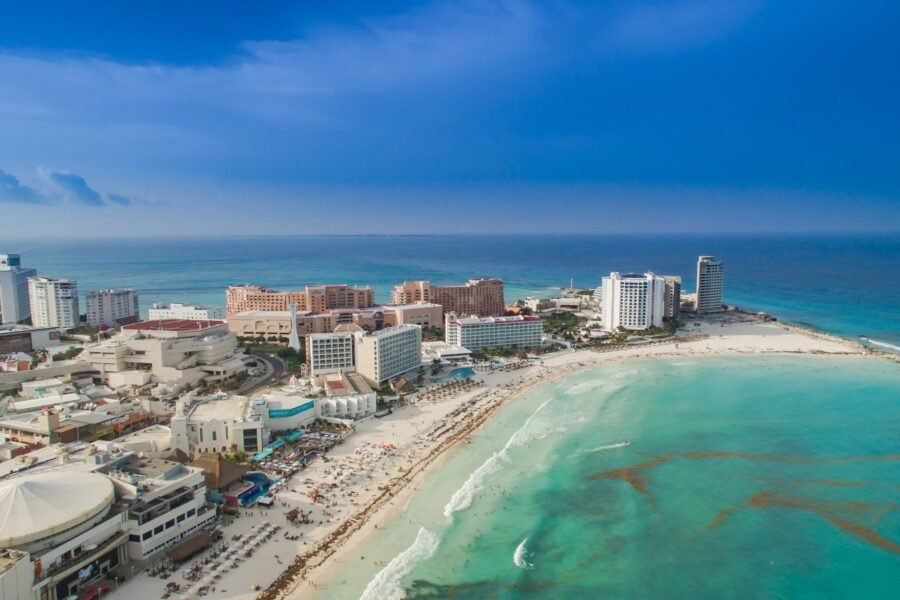
The Riviera Maya's best-balanced months are usually December to April, but school holidays, cold fronts and seaweed all shift the calculation. Here is how to time it.
For most travellers, the Riviera Maya’s best-balanced months are December to April: the dry season, after hurricane season and before the summer seaweed peak. But those are also the months when Canadian, US and UK school holidays push up prices and fill resorts. The right month depends on what a client values most: beach conditions, budget or space.
This guide covers the coast from Cancún south through Puerto Morelos and Playa del Carmen to Tulum. It is about timing. For where to stay, see our Riviera Maya accommodation guide and our guide to adults-only all-inclusives in Cancún.
The climate in brief
According to INEGI, Mexico’s national statistics agency, almost all of Quintana Roo has a warm subhumid climate with summer rain. The mean annual temperature is 26.5°C. The hottest months are May to September and the coolest are December to February. The rainy season runs from May to October and sometimes into November. Annual rainfall is highest on the east coast, in a strip about 35 km wide running south from Playa del Carmen.
In winter, cold fronts from the north (nortes) can bring cloud, wind and cooler days. They also push seaweed: in January 2026 the Mexican Navy warned that a front could bring sargassum ashore at Cancún.
Month by month
| Months | Weather | Sargassum | Crowds and prices |
|---|---|---|---|
| December–February | Dry season; the coolest months; occasional cold fronts | Usually low, but fronts can push it ashore | Christmas–New Year is the peak; UK February half-term brings a second spike |
| March–April | Dry and warming | Can build quickly (it rose to record April levels in 2026) | Canadian March Break and US spring break: the busiest weeks |
| May–June | Hot; rainy season begins | Rising toward the summer peak | Few school holidays apart from UK May half-term; hurricane season opens 1 June |
| July–August | Hot and humid | Usually the heaviest beaching | Summer holidays for families from all three markets |
| September–October | Rainy season; hurricane peak (10 September) | Declining | Outside the major school holidays until UK October half-term |
| November | Rain easing; hurricane season ends 30 November | Annual low in USF’s outlooks | Demand climbs again toward Christmas |
Hurricane season
According to the US National Hurricane Center, the Atlantic hurricane season runs from 1 June to 30 November. Activity peaks on 10 September, with most storms between mid-August and mid-October. Travel insurance and flexible bookings matter most in that window.
Sargassum: when it comes and how to check
Sargassum is floating seaweed that drifts in from the Atlantic. When it reaches the shore, it piles up on beaches and discolours the water.
Read next · GuideBarbados Brings Its Table to Canada2 min →Seasonality. The University of South Florida’s Optical Oceanography Lab publishes a monthly outlook for the Caribbean. In 2026, amounts rose to record April levels in nearly every region. The lab described June and July as the worst beaching months, with amounts falling from July and continuing to decline “until possibly November”. The October 2025 outlook expected the annual minimum in November. The lab ranked 2025 as the record year and expected 2026 to be the second largest. Its outlooks are regional and are not meant to predict conditions on a specific beach.
How to check before you go.
- Mexican Navy: the Mexican Navy (SEMAR) publishes a daily sargassum bulletin for the Mexican Caribbean, with tonnage estimates, tracked seaweed patches and a traffic-light rating.
- CONABIO’s SATsum: SATsum, the Mexican biodiversity commission’s satellite early-warning system, maps sargassum daily and gives a 10-day drift forecast.
- The resort: ask for that day’s photos of the beach and what clean-up crews or barriers it uses.
If the seaweed arrives. Sargassum is a sea problem. Cenotes (inland freshwater sinkholes) and ruins are the obvious fallbacks.
Ruins and cenotes
Heat, not rain, is the main constraint at the ruins. The Tulum archaeological zone opens 08:00 to 17:00 local time, with last entry at 15:30, according to INAH, the national archaeology institute. Arrive at opening in any month, and especially from May to September, the hottest months. INAH’s unified fee includes the national-park charge. In July 2026, a federal decree made entry to the surrounding Parque del Jaguar free, according to the state government. The archaeological-zone fee still applies.
Cenotes work year-round. In summer they offer shade and cool water. In winter, on a cool, windy norte day, they are often the better swim.
Events worth timing a trip around
- Day of the Dead (late October–early November): UNESCO added Mexico’s Indigenous festivity dedicated to the dead to its Representative List of the Intangible Cultural Heritage of Humanity in 2008. It is held each year from late October to early November.
- Xcaret‘s Festival of Life and Death Traditions: Xcaret park, south of Playa del Carmen, holds its festival from 30 October to 2 November, 16:00 to 22:30, with altars, food, workshops, theatre and concerts.
School holidays: the weeks that fill first
Four holiday periods drive peak demand from Not An Atlas’s core markets:
- Christmas and New Year across Canada, the US and the UK.
- UK February half-term, which varies by council.
- Canadian March Break, which varies by province.
- US spring break, spread across March and April by school district.
Check exact dates on our school holidays page before quoting. Resort rates generally track demand, so these weeks are usually the most expensive to book. We do not publish rate figures here because they change with each season’s contracts.
Where to stay
Our Mexico destination file covers the wider country, and the resort guides linked above compare properties area by area. Ocean Signature Resorts is one of the groups with several all-inclusives on this coast, including Ocean Maya Royale and Ocean Riviera Paradise.
Frequently asked questions
What is the best month to visit the Riviera Maya?
For dry weather outside hurricane season, December to April. For fewer people, try late November or early December before the Christmas peak, or the weeks after Easter.
When is sargassum season in the Riviera Maya?
In 2026, seaweed built through spring and peaked in summer, with June and July the worst months in USF’s outlooks. It falls to an annual low around November. Conditions vary by beach and by day.
When is hurricane season in Mexico’s Caribbean?
1 June to 30 November, peaking on 10 September, according to the National Hurricane Center.
Is the Riviera Maya cold in winter?
No, but December to February are the coolest months, and northern cold fronts can bring cloudy, windy days. Pack a light layer for evenings.
Last checked: 19 October 2026
Sources
- INEGI, Aspectos geográficos de Quintana Roo, Compendio 2022: climate type, seasons, rainfall
- NOAA National Hurricane Center, Tropical Cyclone Climatology: season 1 Jun–30 Nov, peak 10 Sep
- USF Optical Oceanography Lab, Sargassum outlook bulletin, 30 Apr 2026
- USF Optical Oceanography Lab, Sargassum outlook bulletin, 31 Jul 2026
- USF Optical Oceanography Lab, Sargassum outlook bulletin, 31 Aug 2026
- USF Optical Oceanography Lab, Sargassum outlook bulletin, 31 Oct 2025
- Secretaría de Marina, daily sargassum bulletins archive
- Secretaría de Marina, sargassum bulletin No. 1323, 24 Jan 2026
- CONABIO, SATsum satellite sargassum early-warning system
- INAH, Zona Arqueológica de Tulum: hours and fees, updated 10 Aug 2026
- Government of Quintana Roo, free access to Parque del Jaguar, 20 Jul 2026
- UNESCO, Indigenous festivity dedicated to the dead, inscribed 2008
- Xcaret, Festival of Life and Death Traditions
- Ocean Signature Resorts release, 18 Aug 2026
Where to stay near Playa del Carmen
Map by Stay22. If you book through it we may earn a commission, at no cost to you. It never decides what we write.

Alicia Loveday is Managing Editor at Not An Atlas, writing from Calgary, Alberta, amid a little creative chaos: a laptop, an iced coffee and about a hundred ideas she hasn't had time to bring to life yet. She became a mom young and spent her twenties raising two kids, so she was 30 before she saw the ocean for the first time, in Aruba. Gliding through that clear Caribbean water on a Seabob felt like freedom, and she's been making up for lost time ever since. She always takes the window seat (she waited 30 years for the view), never travels without the feather pillow she's had since childhood (they're a package deal), and sizes up a new place with a local cocktail and some serious people-watching. She covers fashion, culture, creativity and the people who shape the places we visit. Friends say creative, fearless and unapologetic. Her mum says stubborn, and she'd be right. Next stop: Japan.