England’s Darkest Skies Are in Northumberland
Northumberland's Gold Tier Dark Sky Park covers nearly 580 square miles. Autumn and winter are peak season, and February half-term brings the dark skies festival.
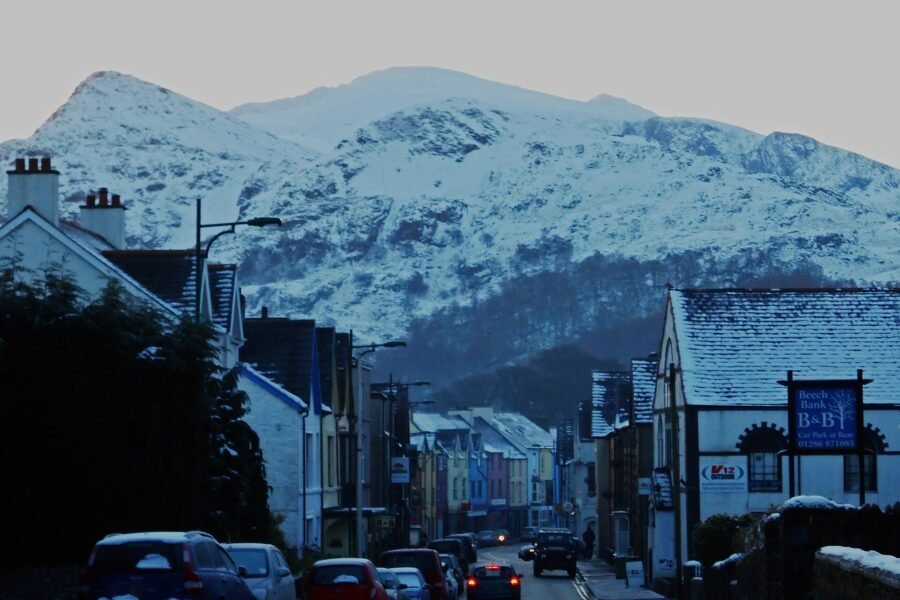
Most of Britain has lost the night sky. Kielder Water & Forest Park estimates that 85% of the UK population has never seen a truly dark sky. In the far north of England, a few hours from Newcastle, that is not a problem. Northumberland National Park and most of Kielder Water & Forest Park together form the Northumberland International Dark Sky Park, which covers nearly 580 square miles and was awarded Gold Tier status, the top grade, in December 2013. It was the first park of its kind in England, and its promoters describe it as one of the largest Gold Tier dark sky parks in the world.
For holidaymakers, that means the Milky Way from a car park. For advisors, it means a winter staycation with a clear reason to book: the darker the season, the better the product.
When to go
Autumn and winter, when the nights draw in, are the best months, according to Kielder Water & Forest Park. Long December nights give the most hours of darkness, though they are also the coldest and cloudiest. Aim for the days either side of a new moon, when moonlight does not wash out fainter stars.
The region’s showpiece is the dark skies festival in February half-term. In 2026 the Northeast Dark Skies Festival ran from 14 to 21 February, with sold-out late-night sessions at Kielder Observatory. The 2027 dates have not yet been announced; February half-term is the likely window, and tickets go early.
Kielder Observatory
Opened in 2008 on Black Fell above Kielder Water, Kielder Observatory is the region’s best-known stargazing venue and runs public outreach events for all ages. Places are limited and must be booked in advance on its website. A typical evening, based on its festival listings, includes a specialist talk, time on the telescopes, hands-on sessions with meteorites or light experiments, a chance to question the astronomers and a hot drink. Observing depends on the weather, so a cloudy night becomes a talk-led evening.
Read next · GuideBarbados Brings Its Table to Canada2 min →Book the observatory first, then build the rest of the trip around it.
Stargazing on your own
The park has designated Dark Sky Discovery sites with easy access, parking and open horizons. Kielder Water & Forest Park lists Elf Kirk Viewpoint, Hawkhope Car Park, Tower Knowe Visitor Centre (lower car park), The Stell at Falstone, Tarset Village Hall, the Stonehaugh Stargazing Pavilion and Kielder Campsite. Bring a red torch, warm layers and a flask, give your eyes 20 minutes to adjust, and check the forecast for clear spells.
Days out
- The Sill: the National Landscape Discovery Centre at Bardon Mill, close to Hadrian’s Wall, with exhibitions, a café and walks from the door. It has hosted dark skies exhibitions during the festival.
- Hadrian’s Wall: the central section, around Housesteads and Steel Rigg, is close enough to combine with a night under the stars.
- Kielder Water: walking and cycling trails around the reservoir and through the forest, with the observatory above it on Black Fell.
Where to stay
The forest park lists everything from B&Bs and hotels to cottages, lodges and campsites, including Kielder Waterside lodges, Calvert Kielder Lodges and Clear Sky Lodge Park. For a hotel with its own telescope, Battlesteads at Wark-on-Tyne has an observatory on site and took part in the national park’s dark skies festival programme. Stays near Hexham or along Hadrian’s Wall make an easy base for both the Wall and Kielder.
Getting there
Newcastle is the nearest major hub, with LNER trains from London King’s Cross and an international airport. From Newcastle, the Tyne Valley line runs west to Hexham and Haltwhistle for Hadrian’s Wall. Kielder itself is remote; a car is the practical option, and winter roads can be icy.
Plan it
- Best months: October to March, around a new moon.
- Book first: the observatory session, then rooms. Festival-week and weekend sessions sell out.
- Stay at least two nights: British weather rarely gives a clear sky on demand.
- Dress for it: thermals, a hat, gloves and insulated boots. Exposed fells can feel far colder than the forecast.
- Bring: binoculars, a red-light torch and a stargazing app set to night mode.
Sources
- Kielder Water & Forest Park, Dark Skies
- Northumberland National Park, Dark Skies Festival
- Kielder Observatory, Dark Skies Festival Late Night, 14 Feb 2026
- Kielder Water & Forest Park, Kielder Observatory
Where to stay near Kielder
Map by Stay22. If you book through it we may earn a commission, at no cost to you. It never decides what we write.