The Best Things to Do in Rome
21 things to do in Rome, from the Colosseum to a day in Tivoli, checked against each site's own website: 2026 prices, timed and named tickets, the new Trevi Fountain fee and this winter's hours.
On a first visit to Rome, start with the Colosseum and the Roman Forum and Palatine, which share one ticket. Then walk the Centro Storico, where the Pantheon, Piazza Navona and the Trevi Fountain are a short walk from each other. Give a morning to the Vatican Museums and the Sistine Chapel, with St. Peter’s Basilica next door. Book Galleria Borghese, cross the river to Trastevere, and save a day for the Appian Way, Ostia Antica or Tivoli.
Rome has changed several rules since the Jubilee year. Since 2 February 2026, entering the basin area of the Trevi Fountain costs €2 for non-residents. The Pantheon ticket rose from €5 to €7 on 1 July 2026, and Castel Sant’Angelo is now €18. Colosseum tickets are in the holder’s name, with a timed entry slot that must be booked. Galleria Borghese cannot be visited without a reservation. Every price and opening time below comes from the attraction’s, operator’s or ministry’s own website, checked on 25 October 2026. For where to base yourself, the city’s tourist tax and airport taxi fares, see our guide to where to stay in Rome.
At a glance
Adult prices for non-residents from each official site, as of October 2026. “Time needed” is our own estimate for a typical visit. Many state sites are free on the first Sunday of the month and on 4 November.
| Thing to do | Neighbourhood | Time needed | Cost (adult) | Book ahead? |
|---|---|---|---|---|
| Colosseum | Ancient Rome | 1.5–2 hours | €18 (24h ticket); €24 Full Experience | Yes (timed slot, name on ticket) |
| Roman Forum and Palatine | Ancient Rome | 2–3 hours | Included with Colosseum ticket; €18 Forum Pass SUPER | Included in Colosseum booking |
| Capitoline Museums | Piazza del Campidoglio | 2–3 hours | €16.50 (with current exhibition) | Recommended (€1 pre-sale fee) |
| Pantheon | Centro Storico | 30–45 minutes | €7 | Recommended (timed slots) |
| Piazza Navona | Centro Storico | 30 minutes | Public square | No |
| Trevi Fountain | Centro Storico | 20–30 minutes | €2 to enter the basin area | No (open-dated tickets online) |
| Spanish Steps | Piazza di Spagna | 20–30 minutes | No fee listed | No |
| Vatican Museums and Sistine Chapel | Vatican | 3–4 hours | €20 at the door; €25 booked online | Recommended |
| St. Peter’s Basilica and Dome | Vatican | 1–2.5 hours | €7 timed visit; Dome €17 (stairs) or €22 (lift) | Recommended |
| Castel Sant’Angelo | Prati, by the Tiber | 1.5–2 hours | €18 | Optional |
| Galleria Borghese | Villa Borghese | 2 hours (fixed slot) | €16 + €2 booking fee | Yes (mandatory for everyone) |
| Villa Borghese park | North of the centre | 1–2 hours | Free park | No |
| Santa Maria in Trastevere | Trastevere | 30 minutes | No fee listed | No |
| Villa Farnesina | Trastevere | 1 hour | €12 | Optional |
| Janiculum promenade | Janiculum hill | 45 minutes | Free | No |
| Baths of Caracalla | South of the centre | 1.5 hours | €10 (includes current exhibition) | No |
| Appian Way and Cecilia Metella | Via Appia Antica | Half a day | €8 (two sites); €12 Park ticket | Park ticket requires booking |
| Catacombs of St. Callixtus | Via Appia Antica | 1 hour (40-minute tour) | €10 | Recommended |
| Ostia Antica | Ostia (day trip) | Half a day | €18 (valid 8 days) | No |
| Tivoli: Villa d’Este | Tivoli (day trip) | 2 hours | Shown at online checkout | Optional |
| Tivoli: Hadrian’s Villa | Tivoli (day trip) | 2.5–3 hours | Shown at online checkout | Optional |
Ancient Rome
The Colosseum, the Roman Forum and the Palatine hill sit together in one archaeological park, the Parco archeologico del Colosseo, just south of Monti. Metro line B stops at Colosseo. The Capitoline hill and its museums overlook the Forum from the north-west.
Colosseum
The Flavian Amphitheatre was built in the 1st century CE under the Flavian emperors. The park describes it as the largest amphitheatre in the world. It hosted animal hunts and gladiatorial games until late antiquity. Later it served as a quarry for building stone, including for St. Peter’s Basilica. The standard ticket covers the first and second levels. The Full Experience tickets add the arena floor, the underground levels or the attic, the upper gallery with a panoramic lift.
Read next · GuideWhere to Stay in Paris18 min →Practical: From 25 October 2026 to 28 February 2027 the park is open 8:30 am to 4:30 pm, with last admission at 3:30 pm. It is closed on 25 December and 1 January. Tickets go on sale 30 days ahead, and you must book a time slot for the Colosseum. Tickets carry the holder’s name, so keep photo ID visible at the entrances. For visits from 9 May 2026, a name can be changed only once, by midnight seven days before, and only for a clerical error or a documented serious reason. Prices: €18 for the 24-hour Colosseum, Roman Forum and Palatine ticket (no arena). The Only Arena ticket is also €18: 20 minutes on the arena floor plus the Forum and Palatine. The three Full Experience tickets cost €24 each: arena; underground levels and arena; or attic. Each is valid for two consecutive days. For the underground, arrive 30 minutes before your slot. Admission is free on the first Sunday of the month and on 4 November. Buy only from ticketing.colosseo.it, the park’s official seller. The free MyColosseum app has audio guides in English and Italian.
Roman Forum and Palatine
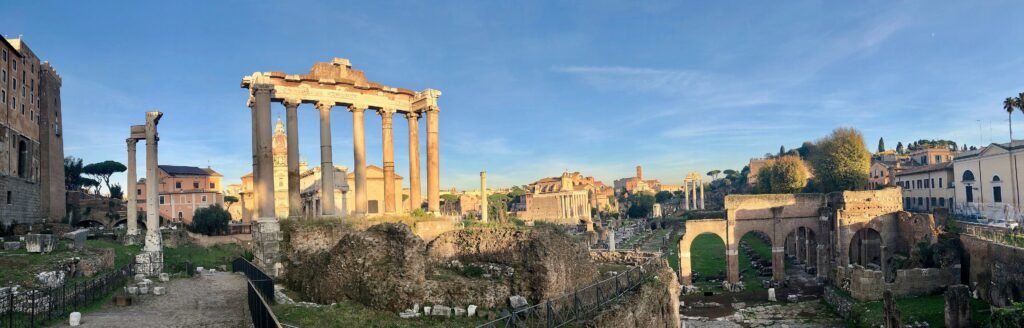
The Forum valley was a swamp until the late 7th century BCE, then the centre of public life for more than a thousand years. Walk past the Arch of Septimius Severus (203 CE), the Temple of Antoninus and Faustina and the Basilica of Maxentius to the Column of Phocas, the last monument built here, in 608 CE. Above it, the Palatine holds the remains of the imperial palaces, the Domus Flavia and Domus Augustana, and the Neronian Cryptoporticus. The Farnese gardens, the Horti Farnesiani, survive on the upper part of the hill, and the Museo Palatino displays finds from the excavations.
Practical: The Forum and Palatine area opens at 9 am; it closes at 4:30 pm until 28 February 2027 (last admission 3:30 pm). Entry is included in every Colosseum ticket and can be used the day before, the same day or the day after your Colosseum slot. The Forum Pass SUPER (€18) covers the Forum, Palatine and Imperial Fora without the Colosseum, and is an open-date ticket valid for 30 days from purchase. Holders of the basic 24-hour ticket can add the extra sites the park groups as “SUPER” for €4. The House of Augustus is closed on Mondays and the House of Livia is closed for restoration. Palatine entrance: Via di San Gregorio 30; Metro line B to Colosseo, or tram 3.
Capitoline Museums
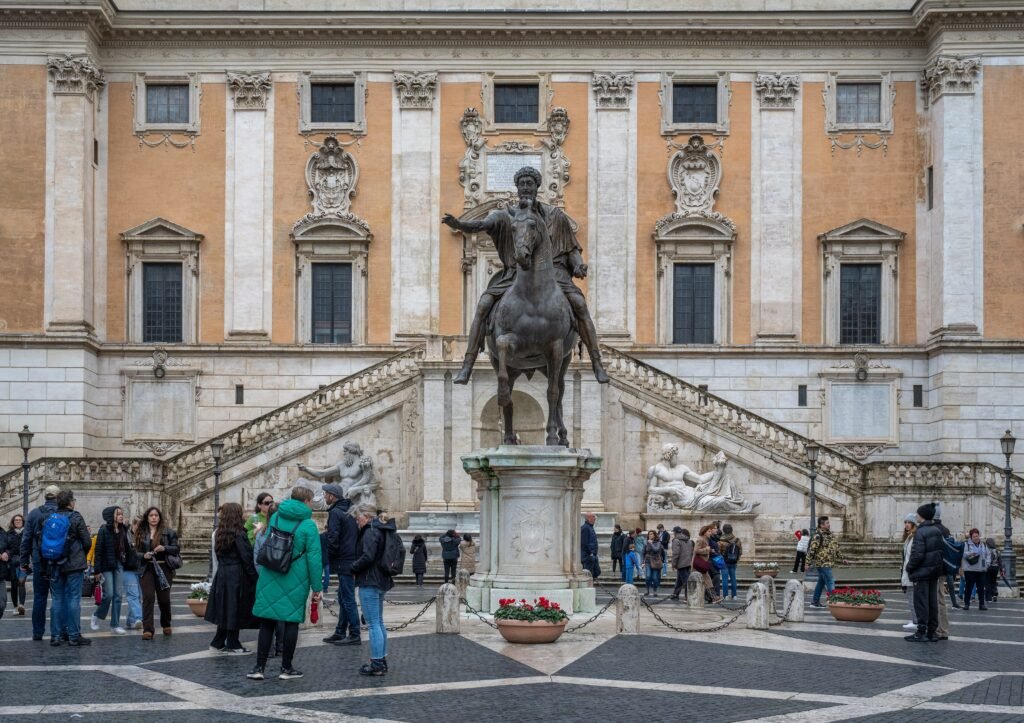
The city’s museums on Piazza del Campidoglio are run by Roma Capitale. Two exhibitions are on this autumn: Angeli – Messaggeri, custodi e viandanti, on angels from antiquity to the present, which is included in the main ticket, and a separately ticketed Diego Rivera exhibition, to 13 December 2026.
Practical: Open daily 9:30 am to 7:30 pm, with last admission an hour before closing. On 24 and 31 December it is open 9:30 am to 2 pm, and it is closed on 1 May and 25 December. Non-resident tickets with the Angeli exhibition cost €16.50 (reduced €11). The Diego Rivera exhibition only costs €15, and a Super Combo for the museums and both exhibitions costs €23.50. Buying online, through the 060608 call centre or at the counter for a later day adds a €1 pre-sale fee; same-day tickets at the desk carry no fee. Rome residents enter free with ID. Audio guide €4, video guide €6. Piazza del Campidoglio 1.
Centro Storico: Pantheon, Navona, Trevi and the Spanish Steps
The historic centre fills the bend of the Tiber west of Via del Corso. Its sights are close together and largely pedestrian, and walking is the quickest way between them.
Pantheon
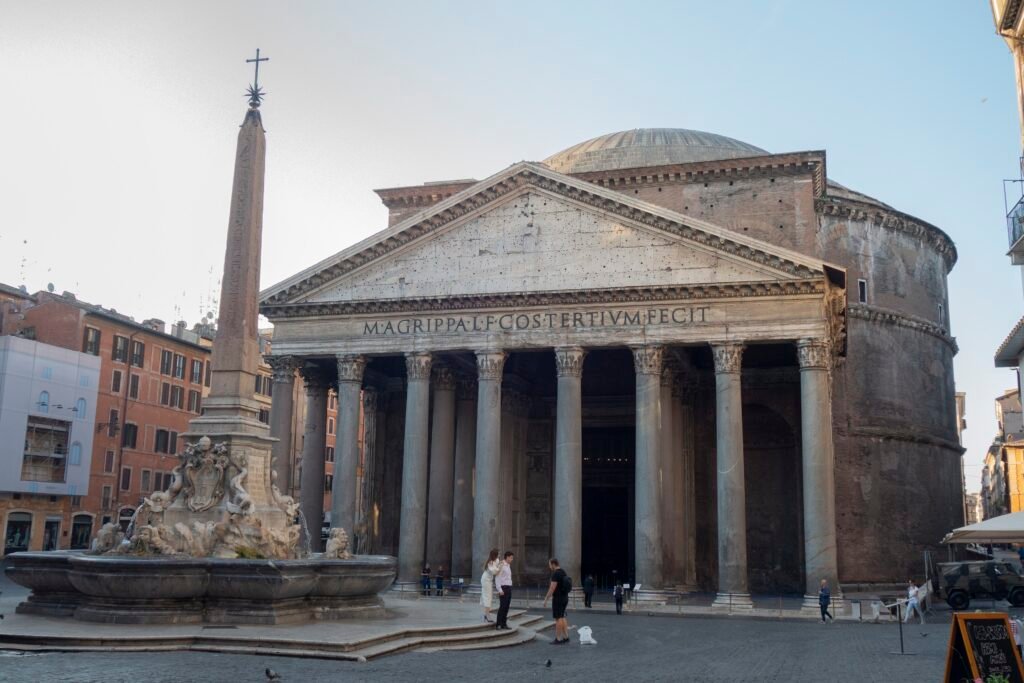
The ministry calls it the best-preserved building of classical antiquity, saved by its conversion into a church, Santa Maria ad Martyres, in 609. Marcus Agrippa raised the first building between 27 and 25 BC. The present structure dates from Hadrian’s reign (118–125), and its dome, the largest unreinforced vault ever built, measures 43.30 metres across and the same in height. It is still a basilica, so dress and behave accordingly.
Practical: Open daily 9 am to 7 pm (last entry 6:30 pm); ticket offices close at 6 pm. Closed 25 December and 1 January. Since 1 July 2026 a ticket costs €7, or €2 for ages 18 to 25, and is free under 18. Buy on the Musei Italiani portal or app, or on site at the desks and machines; there is no skip-the-line option. Entry is by time slot, and each month’s tickets go on sale in the middle of the previous month. On the first Sunday of the month, free paper tickets are handed out on site. Ticket sales stop an hour before liturgies, and access during Mass (5 pm Saturdays and the eve of holidays, 10:30 am Sundays and holidays) is free for worshippers only. Shoulders must be covered; very short shorts or skirts, low-cut or see-through clothing are not allowed. The basilica’s chapter also sells entry bundled with its official audio guide from €10 at pantheonroma.com. Piazza della Rotonda.

Piazza Navona
The square keeps the exact outline of the Stadium of Domitian, built in 86 AD for athletics and horse races; its remains lie five to six metres below today’s street level. Bernini’s Fountain of the Four Rivers stands in the centre, with statues of the Danube, Ganges, Nile and Río de la Plata around an obelisk taken from the Circus of Maxentius on the Appian Way. The Fontana del Moro and the Fountain of Neptune stand at either end, and Borromini completed the church of Sant’Agnese in Agone on the west side.
Practical: A public square; Turismo Roma lists no fee or opening hours.

Trevi Fountain
The fountain is the end point of the Aqua Virgo aqueduct. It was built between 1732 and 1762 to a design by Nicola Salvi and finished by Giuseppe Pannini. Ocean rides a shell-shaped chariot pulled by two horses, one restless and one calm, each held by a triton. Tradition says that a coin tossed into the water means you will return to Rome.
Practical: Since 2 February 2026, visitors who are not residents of Rome or the Metropolitan City pay €2 to enter the inner perimeter around the basin. Residents, children under six, people with disabilities and one companion, licensed guides and Roma MIC card holders enter free. Hours are 9 am to 10 pm, from 11:30 am on Mondays and Fridays, with last entry at 9 pm. Entry starts at 2 pm on 26 October, 9 and 23 November and 7 and 21 December 2026. Buy online in advance (open-dated, non-refundable); at Civic Museums, Tourist Infopoints and authorized sellers (cash or card); or at the entrance (card only). Ticket holders use a dedicated line. Enter from Via della Stamperia and exit on Via dei Crociferi. You may not sit on the edge of the basin, eat, drink or smoke. Wading in the water draws a fine from €450. Outside visiting hours, the fountain can still be seen for free from the square. Metro line A to Barberini, about five minutes’ walk.

Spanish Steps
Francesco De Sanctis built the travertine staircase between 1723 and 1726. It links Piazza di Spagna below with the church of Trinità dei Monti and the Pincio hill above. Turismo Roma describes 11 ramps of 12 steps each, dividing and rejoining as they climb. The steps were restored in 2015–16 with funding from Bvlgari. From about mid-April to mid-May, around 450 azaleas in pots line the ramps.
Practical: A public staircase; Turismo Roma lists no fee or opening hours. Turismo Roma pairs it with the nearby Keats-Shelley House and the church of Trinità dei Monti.
The Vatican and Prati
Vatican City lies across the Tiber, west of the centre. The Vatican Museums are at Viale Vaticano, and St. Peter’s Basilica faces St. Peter’s Square. Castel Sant’Angelo stands where Prati meets the river.

Vatican Museums and the Sistine Chapel
The museums hold the popes’ collections, and the visit includes the Sistine Chapel. The museums ask for complete silence in the chapel, and photography and filming are forbidden there. Elsewhere you may take photos for personal use, without flash.
Practical: Open Monday to Saturday 8 am to 8 pm (final entry 6 pm); visitors must leave the halls 30 minutes before closing. On the last Sunday of the month, entry is free, 9 am to 2 pm (final entry 12:30 pm), unless it falls on Easter, 29 June, or 25, 26 or 31 December. The next free Sundays are 29 November and 27 December 2026. Closed other Sundays, and on 1 November, 8, 25 and 26 December 2026 and 1 and 6 January 2027. On 10 November 2026 the museums open at 9 am. Full ticket €20 at the door, or €20 plus a €5 booking fee on the official site; reduced €10. Children under 7 enter free. Sleeveless or low-cut clothing, shorts above the knee, miniskirts and hats are not allowed. Large bags, rucksacks and medium or large umbrellas must go in the free cloakroom. If you continue to St. Peter’s Basilica, do not leave bags in the museums’ cloakroom.

St. Peter’s Basilica and the Dome
The basilica holds Bernini’s baldachin and Michelangelo’s Pietà, and the tomb of St. Peter lies beneath Michelangelo’s dome. Climb to the top of the dome for a view down into the nave and out over the city’s rooftops. The Vatican Grottoes, the Treasury Museum and the Vatican Necropolis under the central nave are also open to visitors.
Practical: The basilica is open 7 am to 7 pm from 26 October 2026 to 28 March 2027; the dome 7:30 am to 5 pm. The basilica’s booking site sells a timed visit with a digital audio guide for €7, about an hour; it is nominative, non-refundable and cannot be changed. Dome tickets include a basilica visit, scheduled an hour before or after the climb. Dome with stairs costs €17: 231 steps to the terrace, then 320 more to the top, 551 in all. Dome with lift costs €22: the lift goes to the terrace, then 320 steps. Neither is wheelchair-accessible. Trousers and skirts must reach the knee and shoulders must be covered. There is no cloakroom, so bring only a small bag. Phones, food and drink, animals and bulky objects are not allowed inside. Visits can be cancelled at short notice for extraordinary liturgical celebrations, with a full refund.

Castel Sant’Angelo
Hadrian built it in the 2nd century AD as a mausoleum for himself and his family. It was then worked into the city walls as a fortress, used as a papal residence and a prison, and became a national museum in 1925. The name comes from a legend that Pope Gregory the Great saw the Archangel Michael sheathing his sword above it in 590, marking the end of a plague.
Practical: Tuesday to Sunday 9 am to 7:30 pm (last entry 6:30 pm). Closed Mondays, 1 January and 25 December. Full ticket €18 since 1 July 2026, €2 reduced, free under 18; tickets carry the holder’s name. In 2026 the castle also opens on the first Monday of each month, 2 pm to 8 pm (last entry 7 pm), with a €5 ticket sold on site only: the remaining dates are 2 November and 7 December. Your ticket also gives free entry to the Casa Museo Boncompagni Ludovisi and the Casa Museo Hendrik Christian Andersen on the day and the next two days. Ticket offices are in temporary structures outside while the entrance is rebuilt. Booking is optional, through CoopCulture.
Villa Borghese and the north
The Villa Borghese park spreads north of the Spanish Steps and Via Veneto, with the Pincio terrace above Piazza del Popolo on its western edge.

Galleria Borghese
The museum fills the Casino built for Cardinal Scipione Borghese inside the park. To 8 December 2026, a focused exhibition, Titian. Dialogues Between the Sacred and the Profane, sets Titian’s Annunciation, on loan from Treviso Cathedral, beside the Venetian master’s works in the collection.
Practical: Tuesday to Sunday, 9 am to 7 pm (last entrance 5:45 pm); closed Mondays, 25 December and 1 January. Entry is at the start of each hour, 180 people per slot, and a visit lasts two hours. Booking is mandatory for everyone, including free visitors, and carries a €2 fee. Full ticket €16 plus the fee (€11 for the last slot); ages 18 to 25 €2; under 18 free. Free days (first Sunday, 4 November) are released 10 days ahead, still with the booking fee. Prices may rise during exhibitions. There are no skip-the-line options. Roma Pass holders must also book. Phone bookings: +39 06 32810, Monday to Friday.

Villa Borghese park
Cardinal Scipione Borghese laid out the villa and gardens between 1608 and 1633; the Italian state bought it in 1903 and opened it as a public park. Rent a rowboat on the lake by the Temple of Aesculapius. Walk the reconstructed Secret Gardens, or cross Piazza di Siena, home of an international horse show. The park also holds the Museo Canonica, the Etruscan museum of Villa Giulia and the national modern art gallery.
Practical: Open from dawn to dusk; Turismo Roma lists no fee for the park.
Trastevere and the Janiculum
Trastevere sits on the west bank of the Tiber, below the Janiculum hill. Its lanes lead from Piazza di Santa Maria in Trastevere north along Via della Lungara to Villa Farnesina, with the Janiculum promenade above.

Santa Maria in Trastevere
Turismo Roma notes that this was probably the first official place of Christian worship in Rome. Much of the church dates from the 12th century, including the bell tower. Look up at the apse: its mosaics date from around 1140, and Pietro Cavallini’s mosaics of the Life of the Virgin from 1291. Twenty-two ancient granite columns divide the nave, probably taken from the Baths of Caracalla. Domenichino designed the gilded ceiling in 1617.
Practical: An active church; Turismo Roma lists no fee and directs visitors to the parish (+39 06 5814802) for Mass times and visiting conditions. Piazza di Santa Maria in Trastevere.

Villa Farnesina
Baldassarre Peruzzi built this Renaissance villa for the banker Agostino Chigi on Via della Lungara. Raphael and his school painted its loggias with scenes from classical myth, among them the Loggia of Cupid and Psyche and the Loggia of Galatea, alongside Sebastiano del Piombo, Sodoma and Giulio Romano. It is now the ceremonial seat of the Accademia dei Lincei.
Practical: Since 16 February 2026, open Monday to Saturday 9 am to 2 pm (last entry 1:15 pm) and on the second Sunday of each month 9 am to 5 pm (last entry 4:15 pm). Closed other Sundays. The next second Sundays are 8 November and 13 December 2026. Tickets €12; €10 for over-65s and teachers; €7 for ages 10 to 18; free under 10. Guided tours cost €16, in English on Saturdays at 10 am. Holders of any Colosseum park ticket pay €10. Photography without flash is allowed; video is not. Buses 23 and 280 to Via della Lungara.

The Janiculum promenade
Two plane-lined avenues on the Janiculum hill meet at Piazzale Garibaldi, with one of the widest views over the historic centre. The promenade remembers the defence of the Roman Republic in 1849, with 84 busts of Garibaldi’s soldiers and equestrian statues of Giuseppe and Anita Garibaldi. Every day at noon since 1904, soldiers fire a blank shot from a howitzer below the belvedere, a time signal Pius IX started in 1846.
Practical: Always open and free. Walk up from Trastevere along Via Garibaldi.
The Appian Way and southern Rome
The Baths of Caracalla lie in the south of the city. The Via Appia Antica runs further south through its archaeological park, past catacombs, tombs and villas.

Baths of Caracalla
Emperor Caracalla inaugurated the central bath building in 216 AD. Walk through the calidarium, tepidarium, frigidarium and natatio, with gymnasiums on each side, and the libraries in the outer enclosure. Below them, about two kilometres of service tunnels held the furnaces and one of the largest Mithraea in Rome. Frescoes from the Domus di Vigna Guidi, a house older than the baths, are on the route, and the Specchio, a reflecting pool with water jets and lights over the natatio, opened in 2024.
Practical: Tuesday to Sunday 9 am to 4:30 pm (ticket office to 3:30 pm); closed Mondays. A ticket is €8 (reduced €2) plus a €2 exhibition supplement while the Frank Horvat exhibition runs, to 10 January 2027: €10 in all. See the exhibition, and the Domus di Vigna Guidi, by 4 pm. The Domus is closed on crowded days such as the first Sunday. No booking needed. Free on the first Sunday of the month and on 4 November.

The Appian Way and the Tomb of Cecilia Metella
The censor Appius Claudius Caecus laid out the road in 312 BC to link Rome with Capua; it was later extended to Brindisi. Beyond the Domine Quo Vadis church, a long straight stretch of basalt paving runs between ancient tombs, and you can walk or cycle it. At the third mile stands the cylindrical tomb of Cecilia Metella, built between 30 and 10 BC. In the early 14th century the Caetani family turned it into the tower of a castle. The castle rooms now hold the Museo dell’Appia, with statues, sarcophagi and inscriptions from the roadside tombs.
Practical: Tuesday to Sunday, 9 am to 6:30 pm in October and 9 am to 4:30 pm from 1 November to the end of February; last entry 30 minutes before closing. The Cecilia Metella and Capo di Bove ticket costs €8 (€2 for EU citizens aged 18 to 24; free under 18). The Park ticket costs €12 and covers all the park’s sites, including the Villa dei Quintili, for seven days; booking required. Buy on Musei Italiani or at site machines, which take cards only. Via Appia Antica 161. Take Metro line A to Arco di Travertino, then bus 660, or bus 118 from the centre.
Catacombs of St. Callixtus
The underground Christian cemetery on the Appian Way includes the Crypt of the Popes and the Crypt of St. Cecilia. It belongs to the Holy See, and the Salesians of Don Bosco have run visits since 1930.
Practical: Visits only with a guide, starting every 30 minutes and lasting about 40 minutes, for a minimum of two people. Open 9 am to noon and 2 pm to 5 pm (last tours at noon and 5 pm; ticket office closes 4:50 pm). Closed every Wednesday, 25 December, 1 January, from 13 January to 10 February 2027, and on Easter Sunday (28 March 2027). Tickets €10; €7 for ages 7 to 16 and eligible students; free up to 6. Individuals and groups up to 15 book and pay online.
Day trips

Ostia Antica
The excavated port city of ancient Rome lies near the coast, close to Fiumicino Airport. Walk its streets to the theatre and the Piazzale delle Corporazioni, then on to the Capitolium. The Museo Ostiense displays finds from the site. The park also runs the Imperial Ports of Claudius and Trajan, the Museum of Ships and the Isola Sacra necropolis.
Practical: Open Tuesday to Sunday and on holidays from 8:30 am. From 25 October to the end of February it closes at 4:30 pm, with last entry an hour earlier. Closed Mondays and 25 December. The museum opens 10:30 am to 3:30 pm in winter (last entry 3 pm). It is closed on the first Sunday of the month and other free days. The integrated ticket costs €18 (€2 for EU citizens aged 18 to 25). It is valid for eight consecutive days at every site in the park. Audio guides €7 (long route) or €5 (short). No picnics in the excavations; there is a café. Dogs on a lead are allowed. Viale dei Romagnoli 717.
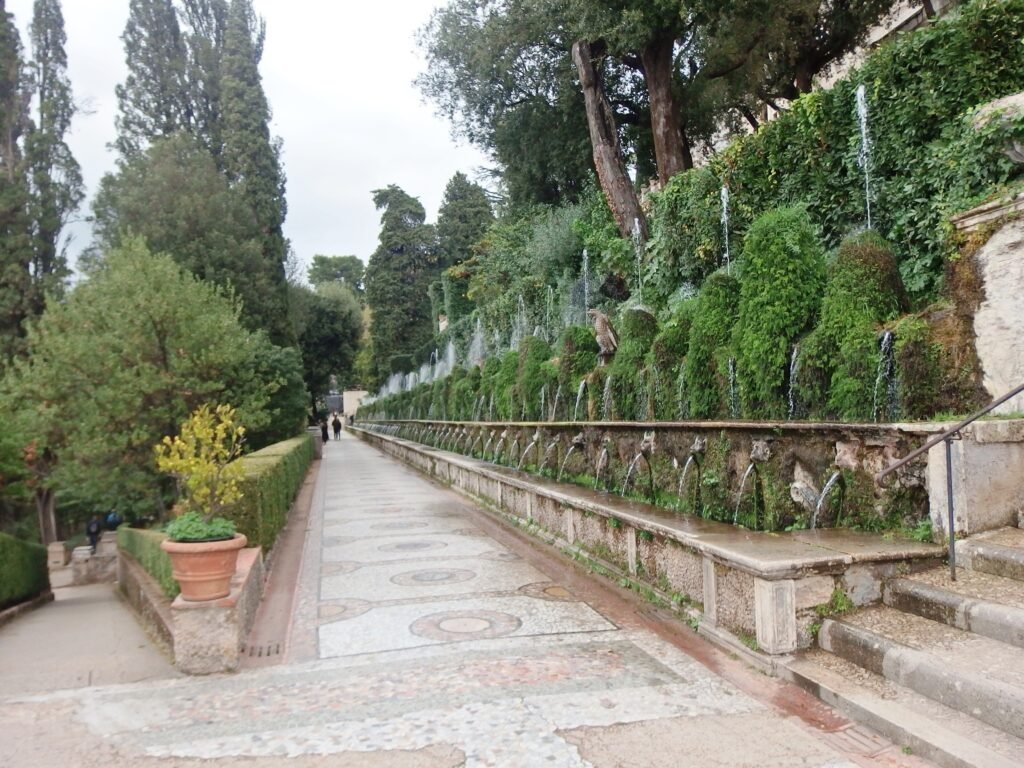
Tivoli: Villa d’Este
Cardinal Ippolito II d’Este, governor of Tivoli from 1550, built the villa and its terraced garden after 1560 to designs by Pirro Ligorio. The garden is full of fountains, nymphaea and grottoes, and has a water-powered organ. A UNESCO World Heritage Site since 2001.
Practical: Open daily, from 2 pm on Mondays (8:45 am on holiday Mondays). Under winter time, from late October, entry runs 8:30 am to 4:30 pm with exit by 5:30 pm. In November and December, entry is 8:30 am to 4 pm, with exit by 5 pm. Closed Monday mornings, 1 January and 25 December. The Organ Fountain plays daily from 10:30 am, every two hours. After heavy rain the fountains may be switched off when the Aniene river rises. Free on the first Sunday of the month and on 4 November. Tickets are sold on the Villae’s official MidaTicket site and at Piazza Trento 5; a Villae Pass covers all the Tivoli sites over three days.

Tivoli: Hadrian’s Villa
Emperor Hadrian built his villa below Tivoli between 118 and 138 AD. It covered at least 120 hectares of residences, baths, nymphaea, pavilions and gardens, joined by underground service routes. About 40 hectares are open today. A UNESCO World Heritage Site since 1999.
Practical: Open daily. Until 31 October, entry runs 8:30 am to 4 pm (exit by 5:30 pm). In November and December, entry is 8:30 am to 3:30 pm, with exit by 5 pm. Closed 1 January and 25 December. The site is mostly outdoors, on paths with slopes, so wear suitable shoes. It has toilets, drinking fountains and a small refreshment point. Free on the first Sunday of the month and on 4 November. Largo Marguerite Yourcenar 1, Villa Adriana (Tivoli).
Plan your days
Closing days drive the plan. The Vatican Museums close on most Sundays and on 1 November. Galleria Borghese, Castel Sant’Angelo, the Baths of Caracalla, the Appia sites and Ostia Antica close on Mondays, and Villa d’Este opens only at 2 pm on Mondays. The Catacombs of St. Callixtus close on Wednesdays, and Villa Farnesina on most Sundays. In winter the Colosseum park’s last admission is 3:30 pm, so go in the morning.
One day. Book an early Colosseum slot, then walk the Roman Forum and the Palatine. After lunch, walk to the Pantheon, Piazza Navona and the Trevi Fountain, and finish on the Spanish Steps.
Two days. Day one as above. Day two, the Vatican: the Vatican Museums and Sistine Chapel at opening (not Sunday), then St. Peter’s Basilica and the dome in the afternoon, with Castel Sant’Angelo on the walk back across the river (not Monday).
Three days. Follow the two-day plan. On day three, take a morning slot at Galleria Borghese (not Monday) and walk through Villa Borghese park. In the afternoon, cross to Trastevere for Santa Maria in Trastevere and the Janiculum view. Visit Villa Farnesina in the morning, as it closes at 2 pm. With a fourth day, head out on the Appian Way, with the Baths of Caracalla, the Catacombs of St. Callixtus (not Wednesday) and the Tomb of Cecilia Metella. Or take a day trip to Ostia Antica or Tivoli.
Getting around
Tickets. ATAC’s tickets cover buses, trams, the metro and urban rail lines within Rome. Fares as of October 2026:
| Ticket | Price | What it covers |
|---|---|---|
| BIT (integrated time ticket) | €1.50 | 100 minutes from validation; one metro journey within that time |
| Roma 24h | €8.50 | Unlimited travel in Rome for 24 hours from first validation |
| Roma 48h | €15.00 | As above, 48 hours |
| Roma 72h | €22.00 | As above, 72 hours |
| CIS (weekly card) | €29.00 | Unlimited travel until midnight on the seventh day, including the day of validation |
Source: ATAC, as of October 2026. Children up to 10 travel free with a fare-paying adult.
Paying. With ATAC’s tap&go, you can tap a contactless card on buses and trams and at the metro turnstiles instead of buying a paper ticket. Digital tickets are also sold in partner apps listed by ATAC.
Useful stops. Colosseo (line B) for the Colosseum and Forum; Barberini (line A) for the Trevi Fountain; and Arco di Travertino (line A) for bus 660 to the Appian Way. Line C also has a Colosseo/Fori Imperiali station. Most of the Centro Storico is quickest on foot. Taxi fares from the airports are in our where to stay in Rome guide.
When to go
Winter hours start now. From 25 October, the Colosseum park closes at 4:30 pm and Ostia Antica at 4:30 pm. From 26 October, St. Peter’s closes at 7 pm and the Dome at 5 pm. From 1 November, the Appia sites close at 4:30 pm. Holidays also matter. State sites are free on the first Sunday of the month (1 November and 6 December 2026, 3 January 2027) and on 4 November, so expect crowds and no reservations at some sites. The Vatican Museums are free on the last Sunday (29 November and 27 December). Many sites close on 25 December and 1 January. The Catacombs of St. Callixtus close from 13 January to 10 February 2027. In spring, the Spanish Steps are lined with azaleas from about mid-April to mid-May. In summer, the Colosseum park runs a medical post and misting stations for the heat.
Tips for advisors
- Colosseum tickets carry the client’s name. Book on ticketing.colosseo.it once sales open, 30 days ahead, with each traveller’s name as it appears on their ID. Since May 2026 a name can be changed only once, up to seven days before, and only for an error or a documented serious reason. The park warns against secondary resellers.
- Sell the right Colosseum product. The €18 ticket does not include the arena. Underground, arena and attic access need a €24 Full Experience ticket. For the underground, clients must arrive 30 minutes early.
- Galleria Borghese has hard limits. 180 people an hour, two-hour visits, mandatory booking with a €2 fee even for free entries, and no skip-the-line products.
- Brief clients on dress. The Vatican Museums, St. Peter’s and the Pantheon require covered shoulders and no short shorts or skirts. The Vatican Museums also bar hats. St. Peter’s has no cloakroom.
- Price in the 2026 changes. The Pantheon rose to €7 on 1 July; Castel Sant’Angelo is €18; the Trevi Fountain basin costs €2 for non-residents; the Vatican Museums add €5 to book online.
- Watch free days. On the first Sunday of the month and 4 November, state sites are free but crowded. Some, such as the Tivoli villas, take no reservations at all on those days.
- Check closures before you sell a date. Vatican Museums: 1 November, 8, 25 and 26 December. Catacombs of St. Callixtus: 13 January to 10 February 2027. Galleria Borghese, Castel Sant’Angelo, Caracalla, Appia and Ostia: Mondays.
FAQ
What should I not miss in Rome on a first visit?
The Colosseum with the Roman Forum and Palatine, the Pantheon, Piazza Navona, the Trevi Fountain, and the Vatican Museums with the Sistine Chapel and St. Peter’s Basilica.
Do I need to book the Colosseum in advance?
Yes. Entry to the Colosseum needs a booked time slot. Tickets go on sale 30 days ahead, carry your name and must be shown with ID. The basic 24-hour ticket costs €18; Full Experience tickets with the arena, underground or attic cost €24.
Do you have to pay to see the Trevi Fountain?
Only to enter the area around the basin. Since 2 February 2026, non-residents pay €2 from 9 am (11:30 am on Mondays and Fridays) to 10 pm. The fountain is visible for free from the square, and the basin area is free outside those hours.
How much is the Pantheon?
€7 since 1 July 2026, €2 for ages 18 to 25, and free for under-18s and on the first Sunday of the month. Entry is by time slot, booked on Musei Italiani or bought on site.
When are the Vatican Museums free?
On the last Sunday of the month, 9 am to 2 pm (final entry 12:30 pm), unless it falls on Easter or certain holidays. The next dates are 29 November and 27 December 2026. Otherwise the full ticket costs €20, or €25 booked online.
Can I visit Galleria Borghese without a reservation?
No. Every visitor needs a reservation for a timed slot, with a €2 booking fee, including those entitled to free entry.
Sources
- Parco archeologico del Colosseo: opening times and tickets; official ticketing, individual tickets; the Colosseum; the Roman Forum; the Palatine; summer 2026 medical post (press release, Italian)
- Capitoline Museums: hours and address; tickets and video guides
- Ministero della Cultura: Pantheon and Basilica of Santa Maria ad Martyres; Chapter of Santa Maria ad Martyres: visiting the Pantheon
- Turismo Roma: Navona Square; Spanish Steps; Trevi Fountain; Trevi Fountain access ticket (Italian)
- Roma Capitale: Trevi Fountain, tickets, hours and rules
- Vatican Museums: days and hours of closure; prices and tickets; useful information for visitors
- St. Peter’s Basilica: opening hours; visits and dress policy; basilica visit booking; Dome with stairs; Dome with lift
- Ministero della Cultura: Castel Sant’Angelo (Italian)
- Galleria Borghese: tickets and opening hours; exhibitions
- Turismo Roma: Villa Borghese; Basilica of Santa Maria in Trastevere; Janiculum Hill; Appian Way
- Villa Farnesina: hours and information (Italian); tickets (Italian); Ministero della Cultura: Villa Farnesina (Italian)
- Ministero della Cultura: Baths of Caracalla (Italian)
- Parco Archeologico dell’Appia Antica: Mausoleum of Cecilia Metella and Castrum Caetani (Italian)
- Catacombs of St. Callixtus: hours; tickets; reservations
- Parco archeologico di Ostia antica: Ostia excavations and Museo Ostiense (Italian)
- Villa Adriana e Villa d’Este: opening times (Italian); Villa d’Este; Villa Adriana; official tickets
- ATAC: tickets and passes
Where to stay near Colosseum, Rome
Map by Stay22. If you book through it we may earn a commission, at no cost to you. It never decides what we write.

Andrew Lovesey is Editor-in-Chief of Not An Atlas, and always on the hunt for the next big thing: where to go, where to stay and what's worth the photo. His first trip was to the family cottage in Prince Edward Island, all rolling hills, red sand cliffs and jellyfish drifting in the North Atlantic. He'll sit anywhere but the middle seat (no armrest wars), never flies without the adapter that lets his AirPods play the in-flight movie, and has eaten at a McDonald's in every country he's visited. Iceland gets a pass because it doesn't have one. He once learned to bead earrings from Aleqa Hammond, Greenland's first female premier, on a ship in the Northwest Passage, and will tell anyone who'll listen that Cincinnati is wildly underrated. Friends say charming, driven and loyal. His mum says persuasive. He is also Editor-in-Chief of prompt/power and The Remote. Next stop: Greece.